
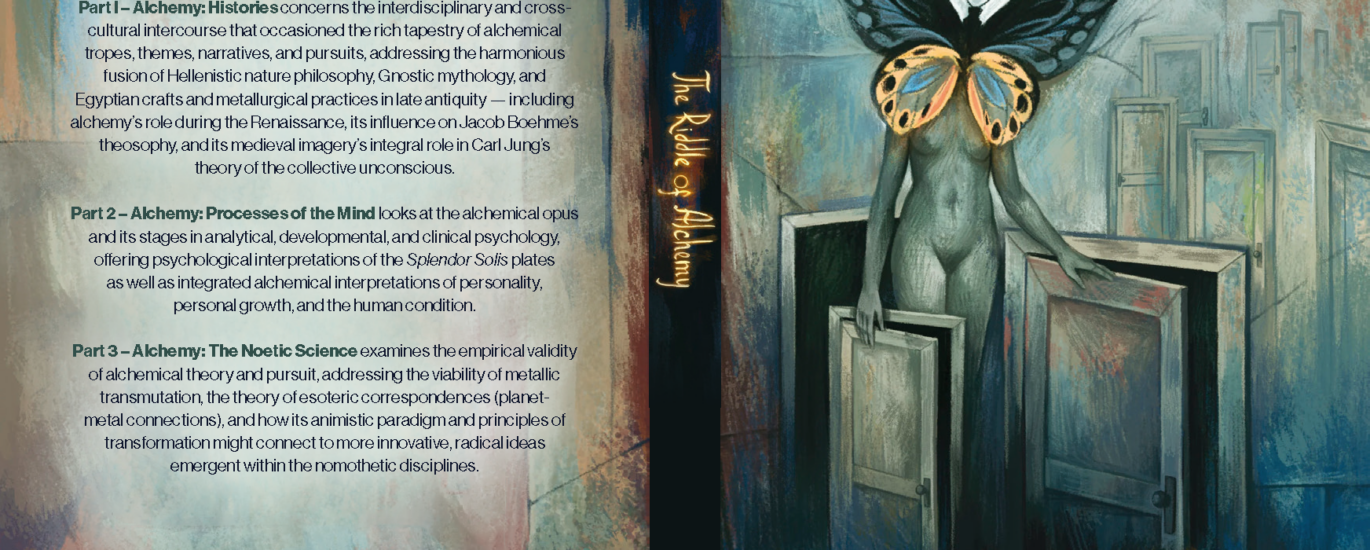

The book deals with alchemy’s rich, multifaceted tradition from three perspectives –history, psychology, and nomothetic science–something not seen in other books of the same subject. It addresses many fascinating questions: what is alchemy? Is there any empirical truth to ancient speculative pursuits like metallic transmutation? How does alchemy intersect with the Western mind sciences and science in general?
REVIEWS:
“Alchemy, the alleged transmutation of base metals into precious ones, has long captured the human imagination, sometimes serving as a metaphor for other types of change. In the provocative book, Paul Kiritsis discusses the topic from several different perspectives, spanning various eras and cultures. from the chemical laboratories of ancient Greece, to the ‘internal alchemy’ of Eastern sages, to the psychological insights of Carl Gustav Jung, alchemy is a topic that never fails to delight and intrigue – as Dr, Kiritsis points out in this reader-friendly book, each chapter of which is an eloquently stated discussion of the topic.”
Professor Stanley Krippner, PhD., California Institute of Integral Studies
“A licensed medical psychologist with graduate degrees in clinical psychology, history, and English, Kiritsis expertly leads an interdisciplinary exploration of alchemy supported by a solid understanding of history, literature, and modern psychology. This analysis is backed by more than 150 scholarly footnotes that carefully balance astute commentary with an engaging writing style. The book does not overwhelm readers with academic jargon, and the text is accompanied by a wealth of visual aids, from historical drawings to full-color reproductions of art found in illustrated manuscripts. Even skeptics will find much to appreciate in this beautifully crafted work. A well-written, expertly researched analysis of the history and legacy of alchemy.”
Kirkus Reviews
Walking in the footsteps of Carl Gustav Jung, Kiritsis ranges effortlessly in his essays from an analysis of enigmatic alchemical motifs to contemporary issues in physics, evolutionary biology, and neuroscience, all the while drawing on a profound knowledge of ancient Greek mythology and philosophy. A thought-provoking and beautifully written work.”
Hereward Tilton, BA Hons. I, PhD, FHEA
“This is a fascinating subject matter to dive into and here in The Riddle of Alchemy, author Paul Kiritsis brings forth a quite breathtakingly engrossing, historically revealing prose on various cults, ancient practices and curious locales, and so much more.”
Exclusive Magazine
“Though the tone is inviting to subject neophytes throughout, prior familiarity with alchemy and ancient history is useful,
as erudite language and rich references to specialized global texts characterize several passages that explain how
these texts set the groundwork for ideas in later periods. When the book’s focus turns to historical figures,
though—including Paracelsus, Jacob Boehme, and Carl Jung—its abstract work feels more grounded. Engravings
and illustrations from alchemical tracts and treatises further enliven the book; these are colorful glimpses of alchemy’s
recurrent themes, including around the sun and the moon. Also included are illustrative plates from Splendor Solis,
alongside essays describing the artwork in clear terms and applying psychological concepts to interpret their
compositions. Here, the book’s sometimes tenuous connections of alchemy to psychology are at their most convincing.
The history book The Riddle of Alchemy elucidates a storied natural philosophy and protoscience, showing its creative
influence on modern psychology.”Foreword Clarion Review
“The writing and research both impress, and there are enjoyable finds herein…”
David Messineo, Editor/Publisher of Sensations Magazine